A date is not a story
The framework helps shape scenes and turning points so the subject has narrative momentum without turning conjecture into fact.
History Co-Author is a guided AI writing framework for people who want to develop narrative nonfiction from historical evidence—not simply generate paragraphs that sound convincing.
It brings research questions, source records, chapter planning and documentation into a repeatable process for Claude or ChatGPT.
18-question setup · Source-led research · 29-module training · 14-day seller-advertised guarantee
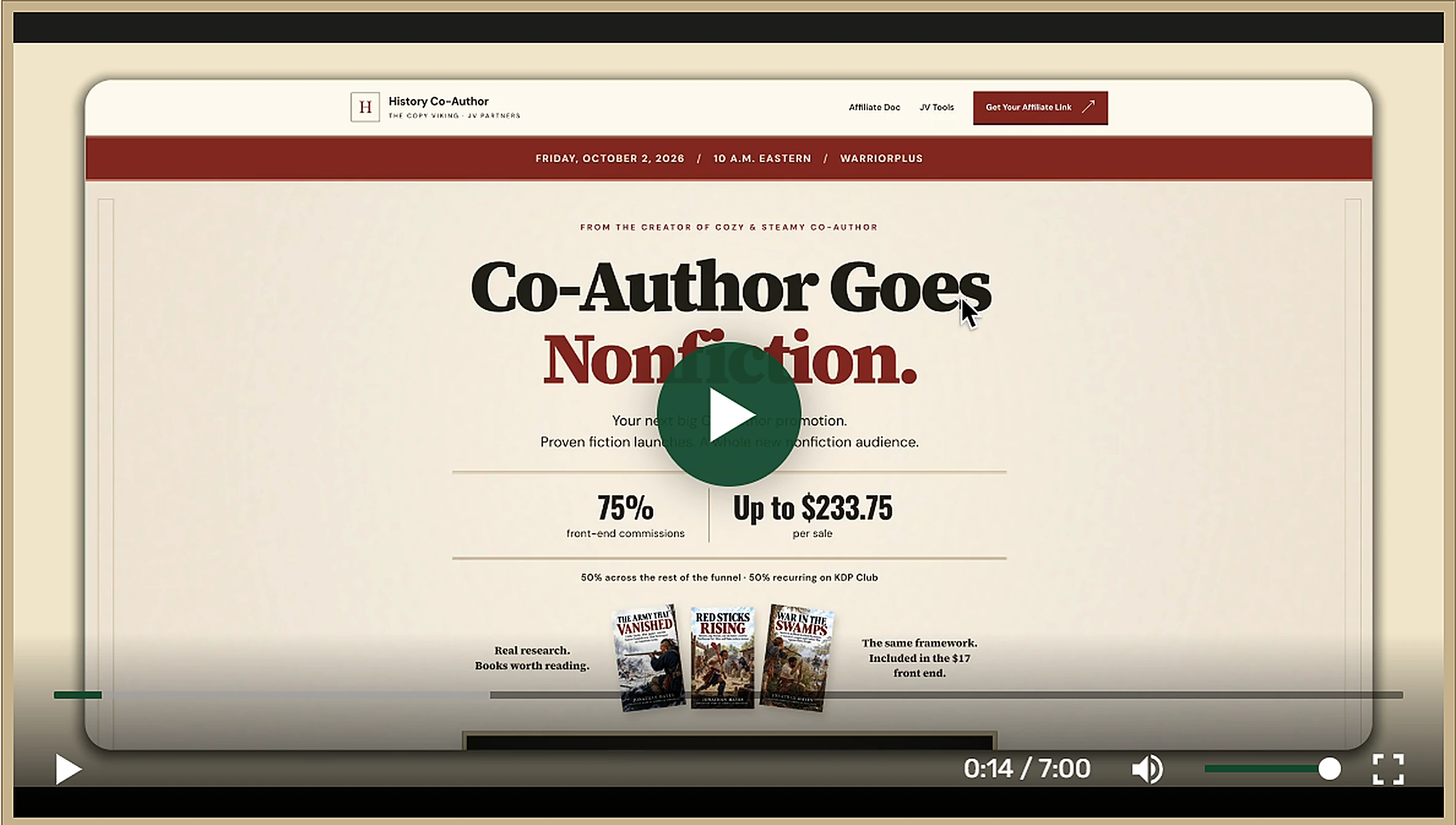
Historical nonfiction asks more from an author than an exciting opening. Dates must agree, quotations need a source, disputed accounts must be presented fairly and the narrative must resist the temptation to invent certainty.
The supplied History Co-Author framework is built to organize those demands. It guides the writer from selecting a subject through a research record, book plan, drafts and the notes readers may consult at the end.
Its aim is narrative history: factual events presented with momentum, character and consequence, rather than a timeline of disconnected summaries.
Explore the full workflow →The framework helps shape scenes and turning points so the subject has narrative momentum without turning conjecture into fact.
A careful historian must compare testimony, explain gaps and distinguish direct evidence from interpretation.
Readers need a reliable way to trace quotes, names and historical claims back to the material supporting them.
Begin with a subject and work through the 18-question guided setup.
Identify primary and secondary evidence and note where accounts diverge.
Assemble a Research Bible, Book Bible, people-and-places reference and chapter plan.
Use Claude or ChatGPT chapter by chapter, reviewing narrative choices as you go.
Check dates, quotations, context, names and links between chapters against sources.
Prepare notes, a cast of characters, a selected bibliography and material for publication.
Genre guidance for voice, scene construction, pacing and the boundary between documented fact and invention.
Eighteen guided decisions plus a structured path for organizing source material and a coherent book outline.
A writing and self-review resource designed to reduce clichés, repetitive AI language and dull exposition.
Workflow plugins described for Claude Cowork and ChatGPT Work. Availability can depend on your AI plan and platform.
Training on choosing topics, researching, drafting, editing, formats, publishing and promoting a history title.
Templates and steps for named-person references, chapter notes, sourcing notes and a selected bibliography.
| Work | History Co-Author framework | Unstructured prompting |
|---|---|---|
| Subject planning | 18 guided questions and a repeatable setup | You invent the entire process |
| Research tracking | Dedicated documents intended to capture evidence | Requires a tracking system you create |
| Chapter coherence | Book-level plan and continuity reference | Potentially fragmented across chats |
| Notes and bibliography | Closeout steps to assemble these elements | Must be planned separately |
| Accuracy guarantee | None — source checking remains essential | None — source checking remains essential |
The developer's September 24, 2026 launch announcement advertised a $17 front-end price during launch week and said pricing would rise to $27 or more afterwards. That original launch window has ended, so neither figure should be represented as today's confirmed checkout amount.
This is a framework used with Claude or ChatGPT. An appropriate third-party AI subscription or usage allowance may add cost. Optional upgrades are separate from the basic system.
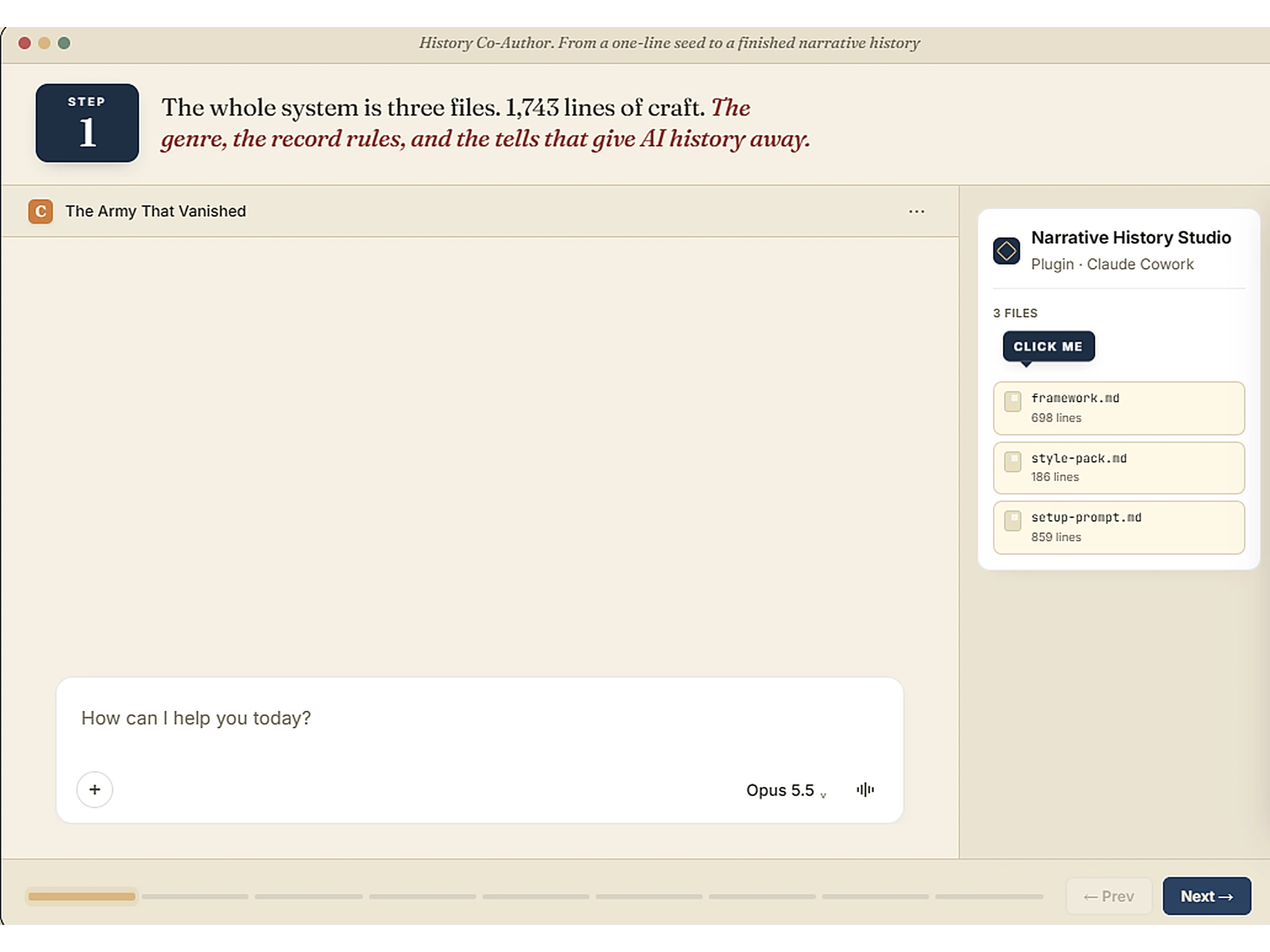
Research documentation and source questions are central to the proposed workflow rather than an afterthought.
A stepwise plan can help first-time nonfiction authors manage a project that feels too large to begin.
The product uses Claude or ChatGPT; compatibility, usage caps and potential subscription costs are external.
No prompt library can independently certify historical accuracy, rights or quote authenticity.
Potentially useful for history enthusiasts ready to research, edit and build a source-backed book.
Not suitable for anyone expecting guaranteed KDP royalties or an automatically reliable manuscript.
The workflow is described as accessible to interested beginners, but publishing accurate nonfiction still requires careful research, source evaluation and editing.
Yes. History Co-Author is a framework intended to work within a supported Claude or ChatGPT environment. Platform access or subscriptions are separate.
No. AI can invent quotations, dates or source references. Verify every significant claim against reliable originals or reputable scholarship.
The proposed closeout process assembles supporting documents such as a cast of characters, chapter notes, source explanations and selected bibliography.
The training discusses book preparation and KDP publishing, but you must follow current platform rules, including any AI-related disclosure obligations.
The developer described the base History Co-Author product as a one-time purchase. Your chosen AI tool or optional services may have recurring costs.
The provided seller materials advertise a 14-day money-back guarantee; verify eligibility, dates and support instructions at checkout.
No. This is an independently published affiliate information website, separate from the creator and checkout platform.